
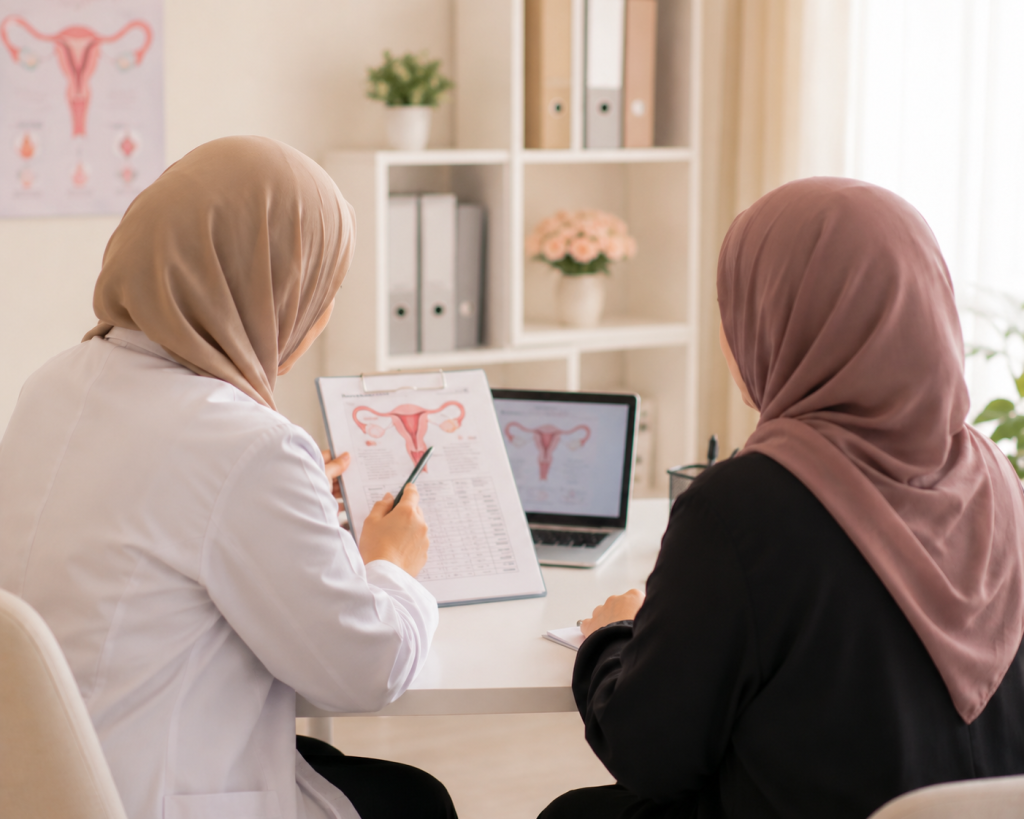
Early detection of cervical cancer: simple steps to protect your health
Cervical cancer is one of the preventable and avoidable types of cancer, and the secret to this lies in the "early detection". Unlike many other types of tumors, this disease develops very slowly over the years, giving doctors a golden opportunity to detect and treat any abnormal changes in cells before they become cancerous cells.
Here is a simplified guide on the importance of early detection and effective steps to protect your health:
Why is an early detection a lifeline?
In its early stages, cervical cancer does not cause any symptoms or pain. Performing periodic checks is the only way to be reassured. Medical studies indicate that regular examination reduces infection and mortality rates by more than 70%, because pre-cancerous cells treatment is simple and completely successful.
Simple steps to protect your health
1. Pap smear:
- What is it? A quick, simple and painless examination that takes a few minutes inside the gynecologist's office, where a light sample of cervical cells is taken for examination under a microscope.
- When is it recommended? Women are advised to perform this examination regularly (usually every 3 to 5 years), according to the medical advice and age of the woman.
2. HPV test: HPV Test:
- What is it? This test detects the presence of human papillomavirus (HPV) DNA, particularly the high-risk strains responsible for most cases of cervical cancer. It can be performed alongside a Pap smear.
3. HPV Vaccine:
- Modern vaccines provide strong protection and guarantee against the most common disease-causing strains, preferably at an early age to get the most preventive benefit.
Warning signs that require immediate examination
Despite the importance of the periodic preventive examination and the absence of symptoms early, you should see a doctor immediately without waiting for the next examination if you notice any of the following indications:
- Unexplained vaginal bleeding between menstruation periods.
- Bleeding or pain during or after the marital relationship.
- Unusual vaginal discharge that smells bad or bruised.
- Persistent pain in the pelvic area is not related to the menstrual cycle.
Your health begins with your awareness, and taking care of these simple tests gives you peace and protects your future and health for many years. Take the move today, you will avoid a lot tomorrow.
Leave a comment
Leave a comment